
Co-living spaces see 40% demand increase among young professionals
Co-living concepts are booming in Vienna, with demand jumping 40%. Neubau and Mariahilf lead the trend as housing affordability tightens for young professionals.
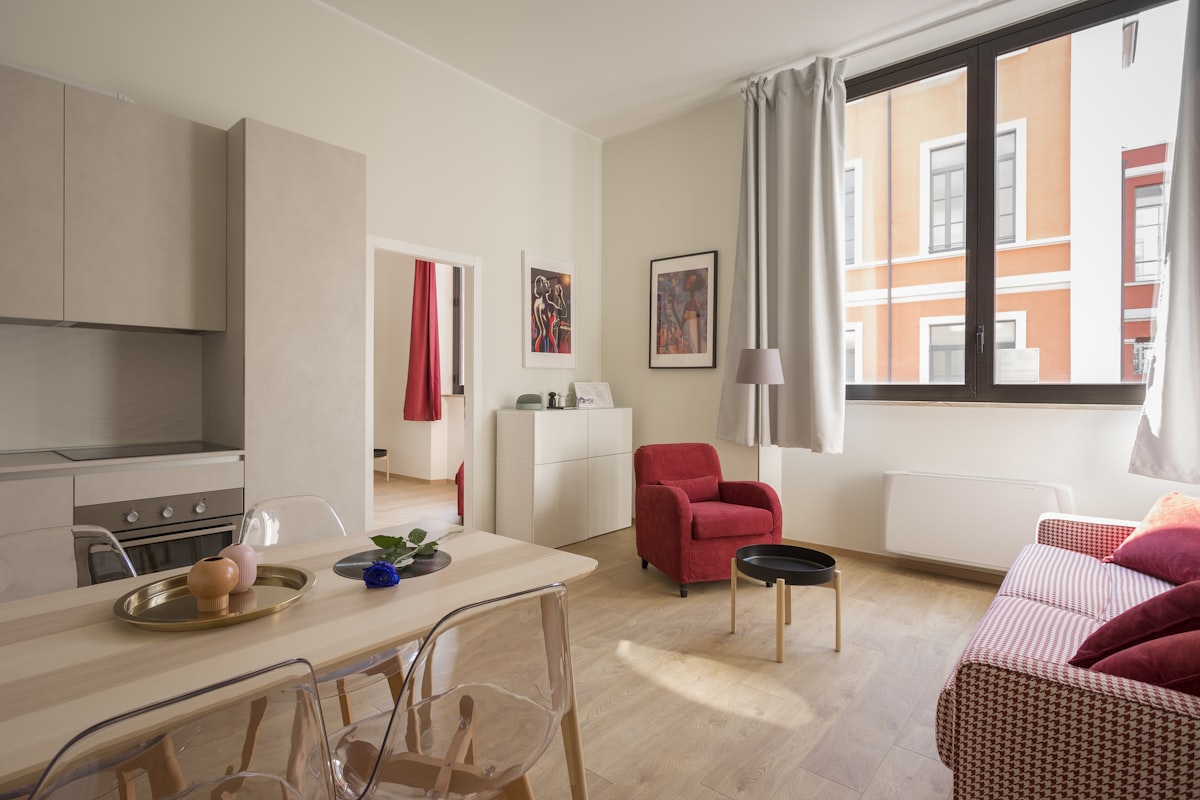
Co-living — shared residential spaces with private bedrooms and communal kitchens, work areas, and social spaces — has gone from niche concept to mainstream demand driver in Vienna. Inquiries for co-living units jumped 40% year-over-year in Q1 2026, with the strongest growth in the 6th (Mariahilf) and 7th (Neubau) districts.
The economics explain the surge. A private room in a co-living space typically costs €650–900/month including utilities and internet — roughly 30% less than a comparable studio apartment in the same neighborhood. For a young professional earning €2,500–3,500/month, the savings are significant.
Vienna's co-living market is evolving beyond the student-housing model. Modern operators offer professionally designed spaces with high-speed internet, weekly cleaning, community events, and flexible lease terms (often month-to-month). The target demographic has shifted from students to young professionals aged 25–35 — often international workers drawn to Vienna's tech and creative sectors.
The supply side is responding. At least five major co-living operators are now active in Vienna, with combined capacity estimated at 2,000+ beds. Several new projects are in the pipeline for 2026–2027 delivery, particularly in the 2nd (Leopoldstadt), 5th (Margareten), and 15th (Rudolfsheim-Fünfhaus) districts.
For landlords and investors, co-living offers an interesting yield play. A 120m² apartment converted to a 4-room co-living unit can generate 40–60% more gross rental income than a traditional single-tenant lease. The trade-off is higher management overhead and tenant turnover, but professional operators handle these aspects at scale.
ECB holds rates at 2% as Austria's rent cap squeezes landlords — what it means for Vienna buyers
The METROX demand index correlates with co-living activity. Districts with the strongest co-living presence — Neubau (71), Mariahilf (67), and Josefstadt (68) — are also among the highest-scoring for overall demand. Young professional activity drives not just co-living but also café culture, retail spending, and neighborhood vibrancy.
The trend reflects a broader shift in how younger generations approach housing. Ownership rates among under-35s in Vienna have declined steadily, from approximately 15% in 2015 to roughly 10% in 2026. High property prices and changing lifestyle preferences — flexibility, community, location over space — are structurally supporting the co-living model.
Risks for the segment include potential regulatory attention (Vienna's housing authorities are monitoring the category) and market saturation if too many operators target the same inner-city districts. Diversification into outer districts with good metro connections could provide the next growth wave.
The bottom line: co-living is no longer a trend — it's a structural feature of Vienna's rental market. For investors, it represents a yield enhancement strategy; for young professionals, it's the most accessible path to living in Vienna's most desirable neighborhoods.
Disclaimer: This article is for informational purposes only and does not constitute investment advice. All figures are based on publicly available data and METROX estimates.
Construction permits down 15% — supply squeeze expected to worsen by Q3
Next →Mortgage rates drop below 3% for first time since 2024 — market reacts
Related Stories

ECB holds rates at 2% as Austria's rent cap squeezes landlords — what it means for Vienna buyers
METROX Research

Vienna apartment prices climb 3.2% in Q1 2026 — where the market is heading next
METROX Research

Best districts to buy property in Vienna in 2026 — a data-driven guide
METROX Research

Vienna real estate demand index — how METROX tracks the market in real time
METROX Research
Stay informed
Weekly market digest — top headlines, index changes, and district alerts.
Built by Lishchuk & AI